


Common Causes of Speech Delay in Children
Common Causes of Speech Delay in Children
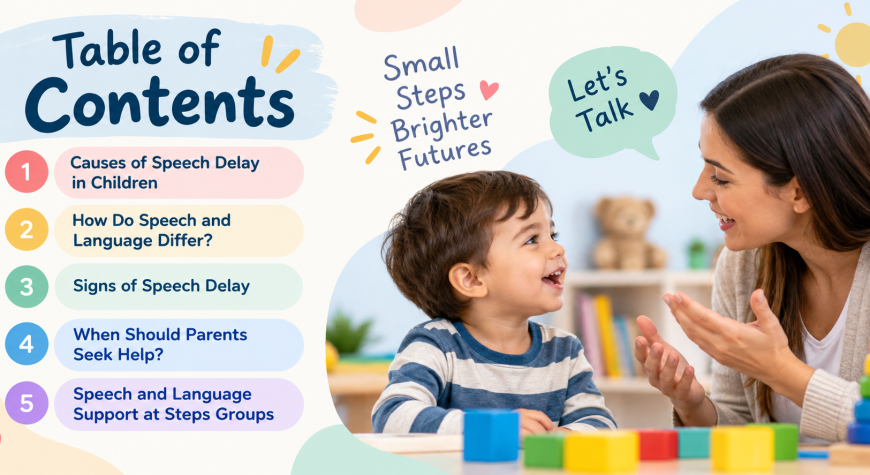
Table of Contents
- Causes of Speech Delay in Children
- How Do Speech and Language Differ?
- Signs of Speech Delay
- When Should Parents Seek Help?
- Speech and Language Support at Steps Groups
Children develop speech and language skills at different rates. Some may begin speaking earlier, while others take longer to use words and sentences. However, when a child is consistently behind expected communication milestones, it may be helpful to understand the possible causes of speech delay and seek professional guidance.
Causes of Speech Delay in Children
- Hearing difficulties can make it harder for children to understand words, imitate sounds, and develop clear speech.
- Children learn language through everyday interaction, including talking, reading, playing, and responding to communication attempts.
- Some children understand language well but have difficulty producing certain sounds, which can make their speech harder to understand.
- Some children may have difficulty understanding language, learning new words, forming sentences, or expressing their thoughts, even when their hearing is normal.
- Speaking requires coordinated movement of the lips, tongue, and jaw.
- Speech delay can sometimes occur alongside developmental differences that affect social communication, interaction, gestures, or understanding language.
How Do Speech and Language Differ?
- Speech is how a child produces and combines sounds to say words clearly.
- Language is how a child understands and communicates ideas, needs, and feelings using words, gestures, or other forms of communication.
Signs of Speech Delay
Every child develops at their own pace, but certain age-related signs may indicate that an assessment could be helpful:
- By 12 months: The child rarely uses gestures such as pointing, waving, or showing objects to communicate.
- By 18 months: The child uses very few spoken words, relies mainly on gestures, or has difficulty imitating sounds.
- By 2 years: The child is not combining words, has very limited spontaneous speech, or is difficult to understand.
- At any age: A child has difficulty understanding simple language, is not making steady progress, or loses words or communication skills they previously had.
When Should Parents Seek Help?
Parents should consider professional advice if a child is missing several communication milestones, is not making steady progress, or loses skills they previously developed. A pediatrician, audiologist, or speech-language pathologist can help identify possible causes and recommend appropriate support.
Speech and Language Support at Steps Groups
Steps Groups provides speech and language therapy for children, with support tailored to individual communication needs. Therapy may address areas such as vocabulary, comprehension, pronunciation, articulation, and overall communication.
Understanding the possible cause of a speech delay is an important first step toward appropriate intervention. Early assessment can help families understand their child’s strengths and provide the right opportunities to develop communication skills.
