

How Occupational Therapy Helps Children with Down’s Syndrome
How Occupational Therapy Helps Children with Down’s Syndrome
Children with Down’s syndrome often experience delays in motor, cognitive, and self-care skills. With the right support, they can build independence and confidence. Occupational therapy for Down’s syndrome focuses on strengthening everyday abilities that help children participate fully at home, in school, and in the community.
Why Occupational Therapy Is Important
Children with Down’s syndrome may have low muscle tone, joint flexibility, delayed coordination, and slower skill acquisition. These challenges can affect writing, dressing, feeding, and classroom participation.
Occupational therapy for Down’s syndrome addresses these areas through structured, goal-based intervention. Therapy focuses on practical outcomes that improve daily functioning rather than isolated exercises.
Role of Early Intervention OT
Starting therapy early can significantly improve long-term outcomes. Early intervention OT supports infants and toddlers during critical developmental stages. Early therapy helps children:
- Build muscle strength and stability
- Develop hand and finger control
- Improve sensory processing
- Learn foundational self-care skills
Supporting Fine Motor Skill Development
Many children with Down’s syndrome struggle with hand strength and coordination. Weak muscle tone can make tasks like holding a pencil or buttoning clothes difficult. Therapists focus on fine motor skill development through structured activities such as:
- Bead threading and peg boards
- Clay and hand-strength exercises
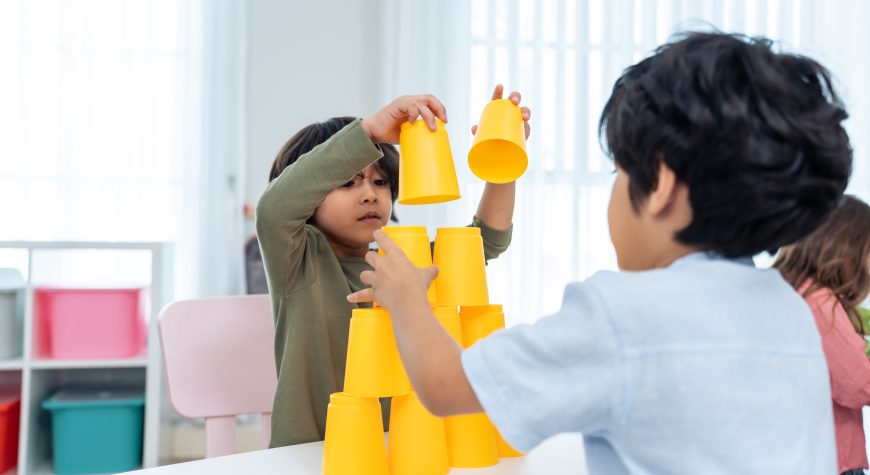
- Puzzles and stacking tasks
- Guided handwriting practice
Improving Daily Independence Through Daily Living Skills Training
Self-care skills often require additional practice. Daily living skills training is a key component of therapy. Children learn step-by-step strategies for:
- Dressing and undressing
- Feeding independently
- Grooming tasks such as brushing teeth
- Managing personal hygiene
Therapists may adapt tools or modify techniques to make tasks manageable. Repetition and structured guidance build confidence.
Sensory and Motor Regulation
Children with Down’s syndrome may experience sensory sensitivities or reduced body awareness. Occupational therapy includes activities that improve.
Social Participation and Attention
Therapy also supports attention span, task completion, and peer interaction. Structured activities help children:
- Follow instructions
- Wait for turns
- Transition between tasks
- Manage frustration
How Down’s Syndrome Child Therapy Works
Down syndrome child therapy begins with an assessment to identify strengths and areas needing support. Therapists then create individualized goals based on the child’s age and developmental stage.
Sessions are interactive and play-based. Parents receive guidance to continue skill practice at home, which strengthens progress.
Consistency across therapy and daily routines is essential for meaningful improvement.
Long-Term Benefits
With consistent occupational therapy for Down’s syndrome, children can experience:
- Greater independence in daily tasks
- Improved motor coordination
- Better classroom participation
- Increased confidence
- Stronger social engagement
Occupational therapy for Down’s syndrome provides structured support tailored to each child’s needs. Through focused fine motor skill development, practical daily living skills training, and timely early intervention OT, children gain the tools they need for greater independence.
If your child has Down’s syndrome and faces challenges with daily activities, consulting a qualified occupational therapist can help you plan the next steps toward steady developmental progress.
