

Speech Therapy vs. Occupational Therapy: Which Does Your Child Need?
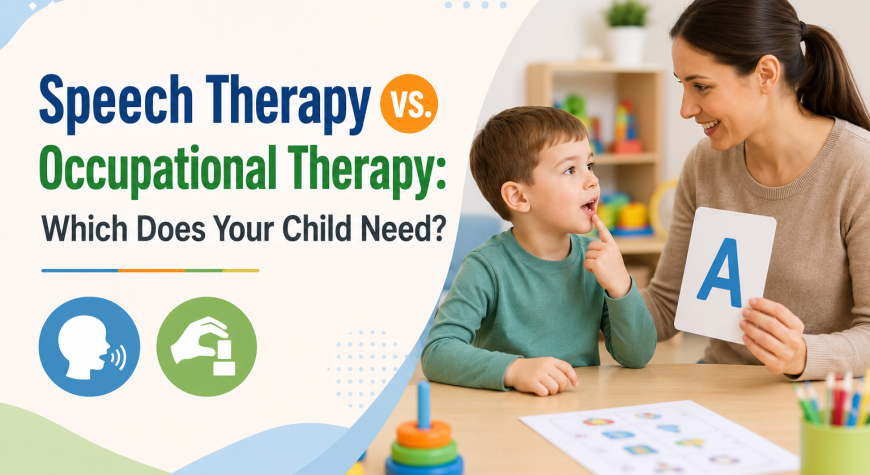
Speech Therapy vs. Occupational Therapy: Which Does Your Child Need?
Every child develops at their own pace, but some may need extra support to overcome developmental challenges. Two of the most common therapies recommended for children are speech therapy and occupational therapy. While they may seem similar, they focus on different aspects of a child’s development. Understanding the difference can help parents choose the right support for their child.
What Is Speech Therapy?
Speech therapy helps children improve their communication skills. It is designed for children who have difficulty speaking, understanding language, expressing themselves, or swallowing. A speech therapist can help children with:
- Delayed speech and language development
- Difficulty pronouncing words
- Stammering or stuttering
- Voice disorders
- Challenges with understanding or following instructions
- Feeding and swallowing difficulties
What Is Occupational Therapy?
Occupational therapy (OT) supports children who have difficulty with movement, coordination, sensory processing, or performing age-appropriate tasks. An occupational therapist can help children with:
- Fine motor skills such as writing, drawing, and buttoning clothes
- Hand-eye coordination
- Sensory processing difficulties
- Balance and posture
- Self-care activities like dressing, eating, and grooming
- Attention and classroom participation
Speech Therapy vs. Occupational Therapy: Key Differences
Speech Therapy primarily helps children improve their communication skills. It focuses on speech clarity, language development, understanding and expressing thoughts, social communication, and swallowing or feeding difficulties. The goal is to help children communicate more effectively and confidently.
Occupational Therapy focuses on helping children perform everyday activities independently. It works on fine motor skills, hand-eye coordination, sensory processing, balance, posture, self-care tasks like dressing and eating, and skills needed for school and play.
- Your child may benefit from speech therapy if they:
- Speak fewer words than expected for their age
- Have difficulty understanding or expressing language
- Struggle to pronounce words clearly
- Find it difficult to interact with others verbally
- Your child may need occupational therapy if they:
- Have trouble holding a pencil or using scissors
- Avoid certain textures, sounds, or movements
- Struggle with dressing, feeding, or other self-care tasks
- Have poor balance or coordination
In some cases, children benefit from both speech therapy and occupational therapy, especially those with developmental delays, autism spectrum disorder, cerebral palsy, or other neurological conditions. The therapies work together to support the child’s overall growth and development.
Early Intervention Makes a Difference
The earlier developmental concerns are identified, the better the outcomes. Early therapy helps children build essential skills during their most important years of growth, improving their confidence, independence, academic performance, and social interactions.
How Steps Groups Can Help
At Steps Groups, experienced therapists provide personalized assessment and therapy programs based on each child’s unique developmental needs. Whether your child requires speech therapy, occupational therapy, or a combination of both, the team works closely with families to create a supportive environment that encourages steady progress.
Choosing between speech therapy and occupational therapy depends on your child’s specific challenges. A professional developmental assessment can identify the areas where your child needs support and recommend the most effective therapy plan.
