

Speech vs Language Delay: Understanding the Difference
Speech vs Language Delay: Understanding the Difference
Many parents become concerned when their child is not communicating as expected. One of the most common questions specialists hear is, “What is the difference between speech and language delay?” While these terms are often used interchangeably, they refer to different aspects of communication. Understanding speech vs language delay can help parents seek the right support at the right time.
What Is a Speech Delay?
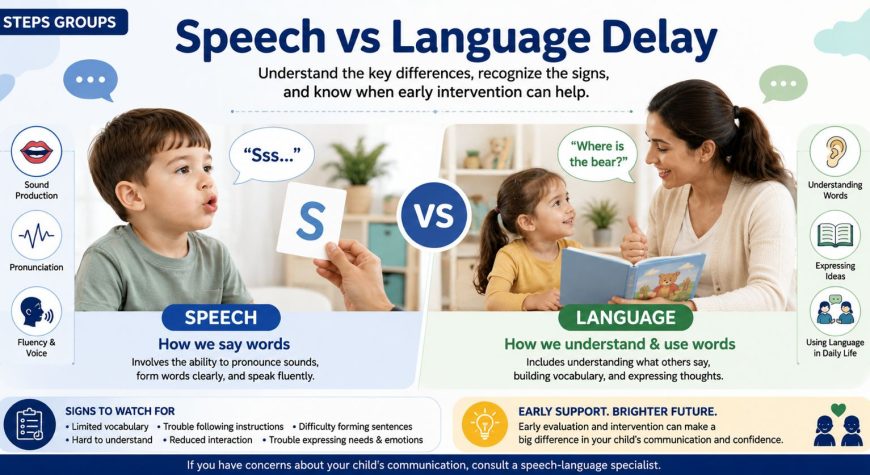
A speech delay occurs when a child has difficulty producing sounds, words, or sentences appropriate for their age. The child may know what they want to say and understand language well but struggle to express words clearly.
Speech challenges may involve pronunciation, sound production, fluency, or voice quality. In some cases, a child may have a speech disorder that affects their ability to speak clearly and effectively.
For example, a child may say only a few understandable words or have speech that is difficult for others to understand.
What Is a Language Delay?
A language delay affects a child’s ability to understand or use language. Language involves much more than speaking. It includes understanding words, following instructions, expressing ideas, and communicating with others.
- A child with a language disorder may have difficulty understanding what people say or expressing thoughts clearly. There are two main types:
- Expressive language delay occurs when a child understands language but struggles to use words and sentences to communicate.
- Receptive language delay occurs when a child has difficulty understanding spoken language, instructions, or questions.
- Understanding receptive vs expressive language delay is important because each type may require different intervention approaches.
Speech Delay vs Language Delay
The key distinction in speech delay vs language delay is that speech focuses on how words are spoken, while language focuses on understanding and using words meaningfully.
A child with a speech delay may know exactly what they want to say but have trouble producing sounds correctly. A child with a language delay may struggle to understand information or express thoughts, even if their speech sounds are clear.
This is the primary difference between speech and language delay that professionals evaluate during assessments.
Signs Parents Should Watch For
Children experiencing child communication difficulties may show signs such as:
- Difficulty pronouncing words clearly
- Limited vocabulary for their age
- Trouble following instructions
- Difficulty forming sentences
- Reduced interaction with others
- Challenges expressing needs and emotions
Does My Child Have a Speech Delay or Language Delay?
Many parents ask, “Does my child have a speech delay or language delay?” The answer is not always obvious. Some children experience only speech difficulties, while others have language challenges or a combination of both.
A professional speech therapy assessment helps identify the exact nature of the problem and determines the most effective treatment plan.
When Should I See a Speech Therapist?
Parents often wonder, “When should I see a speech therapist?” If your child is missing important speech and language development milestones, has difficulty communicating, or struggles to understand language, it is advisable to seek an evaluation.
At Steps Groups, experienced specialists conduct detailed assessments and provide personalized therapy programs to support communication growth. Early intervention often leads to better outcomes and helps children develop the skills needed for learning, social interaction, and everyday communication.
Understanding speech vs language delay is essential for recognizing communication challenges early. Whether your child has a speech disorder, language disorder, expressive language delay, or receptive language delay, timely professional support can make a meaningful difference in their development and confidence.
